

Journal of Applied Biosciences 209: 22138 – 22147
ISSN 1997-5902
Agromorphological characterization of cassava (Manihot esculenta Crantz) accessions cultivated in Gabon’s South West agricultural production hubs
NDIADE BOUROBOU Dyana1,2; ABESSOLO MEYE Clotilde1,2,4; GNACADJA Kouassi Claude1,5; SADIO Oumar8; KOUMBA Aubin Armel1,3; IBABA Jacques Davy1,2; MOUKETOU MOUKETOU Armel1,4; SIMA OWONO Rochat Léotard1,3; M’BOMBONDA MADOUMA Georges Maximin7; MAVIOGHA Armandine1,4; SEVIDZEM Silas Lendzele1,6; MBENG NDONG Hendrix1,2; ZINGA KOUMBA Christophe Roland1,2,3; MINTSA MI NGUEMA Rodrigue1,3,6; Fidèle TIENDREBEOGO9,10; MAVOUNGOU Jacques François1,3,5; MEDZA MVE Samson Daudet1,4
1Central and West African Virus Epidemiology (WAVE) for Food Security, BP : 2246, Akanda-Gabon
2Institut des Recherches Agronomiques et Forestières (IRAF), B.P : 2246, Libreville-Gabon
3Institut de Recherche en Ecologie Tropicale (IRET), BP : 13354, Libreville-Gabon
4Université des Sciences et Techniques de Masuku (USTM), BP : 941, Franceville-Gabon
5Université Internationale de Libreville-Berthe et Jean (UIL-BJ), BP: 20411, Libreville-Gabon
6Laboratoire d’Ecologie des Maladies Transmissibles (LEMAT), Université Libreville Nord (ULN), P.O. Box 1177, Libreville-Gabon
7Laboratoire Géomatique, Ecole Nationale des Eaux et Forêts, BP : 3960, Libreville Gabon
8IRD, University Brest, CNRS, Ifremer, LEMAR, Dakar BP 1386, Senegal
9Institut de l’Environnement et de Recherches Agricoles (LVBV/INERA), Centre National de la Recherche Scientifique et Technologique (CNRST), 01 B.P: 476 Ouaga 01, Ouagadougou, Burkina Faso
10Central and West African Virus Epidemiology (WAVE), Pôle scientifique et d’innovation de Bingerville, Université Félix Houphouët-Boigny (UFHB), Bingerville B.P.V: 34 Abidjan, Côte d’Ivoire
Corresponding Author : GNACADJA Kouassi Claude; gnacaclaude@yahoo.fr ; +241 66 98 09 44
Submitted 22/04/2025, Published online on 30/06/2025 in the https://www.m.elewa.org/journals/journal-of-applied-biosciences https://doi.org/10.35759/JABs.209.4
ABSTRACT
Objectives: Improving cassava production yields requires, among other factors, a scientific understanding of the accessions used in the country. This study aimed to assess the agromorphological diversity of cassava accessions grown in Gabon.
Methodology and Results: A total of 75 cassava accessions collected from the agricultural production hubs in the South West region of Gabon were characterized using nine agronomic descriptors. The descriptive analysis revealed heterogeneity and phenotypic differences for the parameters studied. Principal component analysis confirmed a variability of 56.8% among the accessions. Hierarchical ascending classification categorized the accessions into three clusters, identified as Cluster 1, Cluster 2 and Cluster 3, based on morphological diversity.
Conclusions and application of findings: Cluster 3 included 56 accessions, that have the main stem height (MSH), the number of tuberous roots per plant (NTR/P), and the weight of tuberous roots per plant (WTR/P) values close to the average for the collection. In contrast, four accessions in cluster 2 had values higher than the average for these same descriptors: MSH, NTR/P, and WTR. Knowing these different groups will help policymakers, government officials in the Ministry of Agriculture, researchers, and farmers involved in the cassava production chain in Gabon make informed decisions for a better future for cassava.
Keywords : Accession, Cassava, Classification, Agronomic descriptors, Gabon.
INTRODUCTION
Cassava (Manihot esculenta Crantz) is a root tuber crop grown in tropical areas. It is of major socio-economic importance, due to its starchy tuberous roots and nutritious leaves used as vegetables (Chuzel et al.. 1995; Bokanga, 2001; Koko et al.., 2014; Mouketou et al.., 2022, 2023). In West and Central Africa, cassava is a staple food for many indigenous communities, representing a significant source of calories and vegetable protein (Ognalaga et al.., 2017; Gmakouba et al.., 2018; Mouketou et al.., 2023). While West African countries such as Nigeria, Ghana and Benin manage to meet their local demand for cassava production, other sub-Saharan African countries, such as Gabon, still struggle to meet local demand for cassava, thus importing it from neighbouring countries (Adebayo and Seck, 2022). The main reasons for the lower cassava yields recorded across the continent are well-documented. One significant factor is the impact of diseases and pests. Cassava crops are affected by various diseases caused by bacteria, viruses, and fungi. In Gabon, studies conducted by Mouketou et al.. (2023) revealed that cassava cultivation faces multiple challenges, leading to considerable yield losses. These challenges include a lack of effective agricultural practices, human-wildlife conflicts, the effects of climate change, and pathogen-related diseases. Regarding the phytopathogens affecting cassava, the African cassava mosaic virus and the East African cassava mosaic virus, along with bacterial blight and anthracnose, are among the most widely spread diseases. Other diseases, such as root rot and cercospora blight, are less significant. The survey conducted by Mouketou et al.. (2022) found that cassava mosaic disease (CMD) in Gabon had an incidence rate of 64.29% and an average severity score of 3.16. The spread of CMD is largely attributed to the cross-border movement of virus-infected cuttings and the continuous presence of the virus vector, Bemisia tabaci, throughout the year. Gabon in its effort to revive the agricultural sector, has selected cassava as a crop of national importance towards achieving food and nutrition security. This initiative involves the control and conservation of plant genetic resources, as well as the improvement of crop varieties, including the development of disease-resistant varieties that are well-suited to the country’s agro-climatic conditions. Furthermore, little work has been conducted on the inventory and agromorphological characterization of local cassava accessions cultivated to promote our agricultural resources and varietal selection. To that end, the aim of this study was to assess the agromorphological diversity of cassava accessions cultivated in the southwest region of Gabon.
MATERIALS AND METHODS
Study site : The site selected for this study is located in Malibé (geographical coordinates: 0o56’33.7’“ north latitude and 9o39’68.3”’ west longitude), in the commune of Akanda to the north of Libreville (Figure 1). The type of soil in the site is sandy-clay, under a humid tropical climate, with rainfall varying between 3,000 and 3,200 mm a year and mean annual temperatures ranging between 22 and 28°C.
Cassava accessions sampling: The samples studied in this study were collected during surveys conducted between 2021 and 2022 in Gabon’s southwest agricultural production hubs, specifically in the provinces of Ngounié and Nyanga (Figure 1). The surveys covered 12 departments and 19 villages, focusing on plantations that were between 3 and 6 months old and located approximately 10 km apart. In total, 75 cultivated cassava accessions, identified by 44 local names, were sampled (Table 1). The samples, collected as cuttings, were individually labelled in situ using their vernacular names along with an identification code.
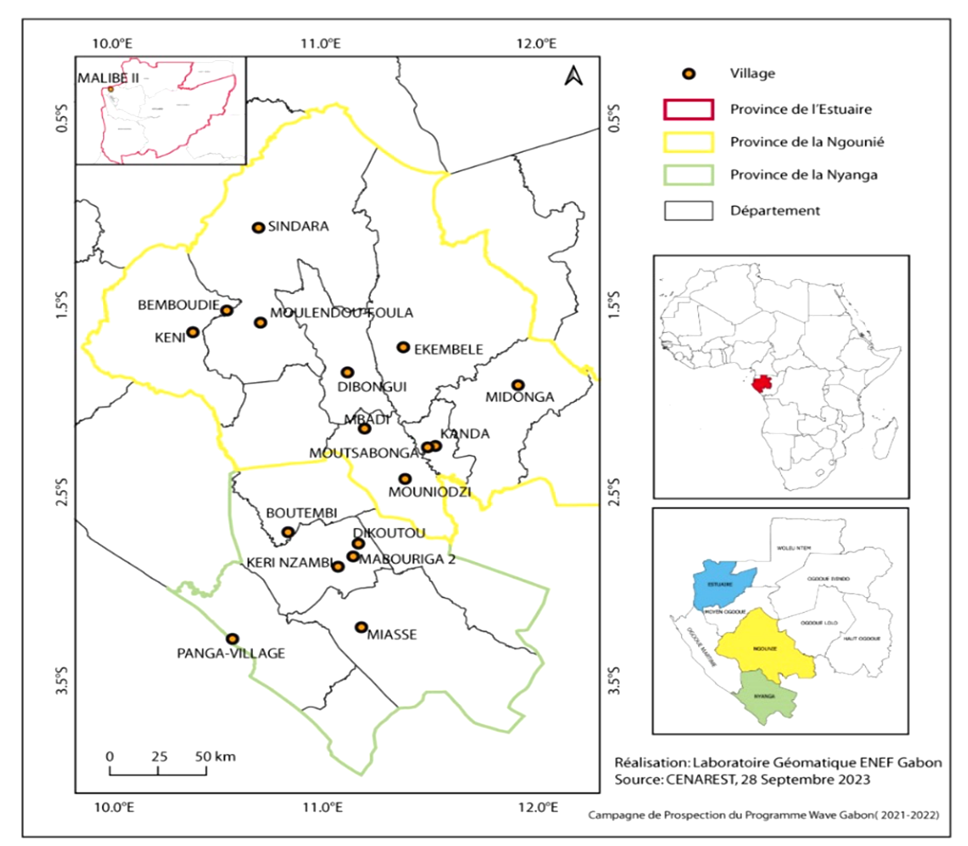
Figure 1. Areas of Gabon’s southwest agricultural production hubs where cassava accessions samples were collected and study site.
Table 1. Names of the cassava accessions collected in Gabon’s southwest agricultural production hubs and used in this study.
| Province | Accessions’ local names (number of specimen) |
| Ngounié | Bassin (1) ; Biere (1), Cougourama (1) ; Ditadi ; Evima (1) ; Foula (1) ; Gnegise (1) ; Ibandagou (2) ; Jaune 2 (1) ; Kanda (1) ; Kobekobe (1) ; Kwata (1) ; Kwata de Mayumba (2) ; Libreville (1) ; Mabiam (1) ; Mabouidi (1) ; Mandilou (1) ; Manguefou (1) ; Moughetou moughufi (2) ; Mouila (1) ; Moussavou (1) ; Moutombi (2) ; Ndongou (1) ; Ndongue (1) ; Nzoga (1) ; Six mois (2) ; Sonadeci (1) ; Tsane katsi (1) ; V2 (1) ; V4 (1) ; V6 (1) ; Violette (1) ; Vive famille (1) ; Yeguesse (1) ; |
| Nyanga | Bilongou (2) ; Dikedi dikedi (1) ; Ditadi rouge (1) ; Evelyne (1) ; Panga1 (1) ; Yeme (1) |
Experimental design : The experimental design used was an “Augmented Design in Randomized Complete Block” described by Nokoe (2001). The accessions collected per province were arranged randomly in two blocks separated by a 2m aisle. Block 1 (ngounié) consisted of 14 sub-blocks and block 2 (nyanga) consisted of 4 sub-blocks. Each sub-block is made up of 6 elementary plots and each elementary plot is made up of 2 lines of 5 plants with a density of 1 plant/m2.
Trial description: The trial was conducted between May 2023 and March 2024. Before planting, the cuttings were treated for 20 minutes with a diluted insecticide solution [90ml/15l] of (Lambda-cyhalothrin 50g/l) and a fungicide (Thiophanate-methyl 450g/l). following the immersion, the cuttings were dried at room temperature and then planted in mounds. Weeding and hoeing were done four (4) weeks and three (3) months after planting. No fertilizers or phytosanitary treatments were applied throughout the trial.
Data collection: Observations were conducted at different stages of plant development. The plants were evaluated for nine agronomic descriptors (Table 2) based on the trait descriptions outlined in the Fukuda et al.. protocol (2010).
Tableau 2. Agronomic descriptors used in this study
| No. | Agronomic descriptors | Unit | Time when recorded (Month post planting) | Code |
| 1 | Number of leaf lobes | – | 6 | NLL |
| 2 | Length of leaf lobes | cm | 6 | LLL |
| 3 | Lobe width | cm | 6 | LW |
| 4 | Petiole length | cm | 6 | PL |
| 5 | Main stem height | cm | 9 | MSH |
| 6 | Number of branches | – | 12 | NB |
| 7 | Size to the first branch | cm | 12 | SFB |
| 8 | Number of tuberous roots per plant | – | 12 | NTR/P |
| 9 | Weight of tuberous roots per plant | g | 12 | WTR/P |
Statistical data analysis: The descriptive analysis was followed by a non-parametric variance study (Kruskal-Wallis test) as carried out to show the existence of significant differences between the means values of the agronomic descriptors. The principal component analysis (PCA) was then used to evaluate the diversity of the accessions, and assess the similarity between the accessions to better understand the relationships among them. Secondly, hierarchical ascending classification (HAC) was used to classify the accessions into homogeneous groups according to the Ward method, using an Euclidean distance similarity index. A discriminant factor analysis (DFA) was conducted to identify the variables that most discriminate between the groups formed and to display them on a factorial plane. The morphometric parameters selected were described and used to establish the matrix for comparing the mean vectors between the groups formed using Wilks’ Lambda test. Analyses were performed using the ade4, MASS, stats, dendextend, vegan and cluster packages of R software (R core Team 2024).
RESULTS
Descriptive analysis of the data (Table 3) shows that the average number of lobes (NLL) was 6, while the dimensions of the lobes vary between 10.98 – 22.32 cm for the length (LLL) and 1.7 – 5.96 for the width (LW). The petiole length (PL) varied between 4.72 and 36.6 cm, with an average of 18.87 cm. In the collection, the average height of the main stems (HMS) was 311.77 cm with the number of branches (NB) varying between 0 and 6. The number of tuberised roots per plant (NTR/P) varies from 1 to 9 and the average weight of tuberised roots (WTR/P) was 1688.43 g.
Table 3. Descriptive analysis results
| Accessions | NLL | LLL | LW | PL | MSH | NB | SFB | NTR/P | WTR/P |
| Average | 6,66 | 15,269 | 3,673 | 18,879 | 311,77 | 1,75 | 93,083 | 3,194 | 1688,43 |
| Maximun | 7 | 22,32 | 5,96 | 36,6 | 484 | 6 | 232 | 9 | 7365 |
| Minimum | 5 | 10,98 | 1,7 | 4,72 | 180 | 0 | 0 | 1 | 50 |
| Std Dev | 3,72 | 2,496 | 0,839 | 5,476 | 67,933 | 0,21 | 74,36 | 1,835 | 719,476 |
| CV | 0,5585 | 0,16346 | 0,22842 | 0,29005 | 0,2178 | 0,1234 | 0,79885 | 0,57451 | 0,426121 |
Table 3 also showed the level of variability within the cassava collection studied. The coefficients of variation (CV) of the parameters measured ranged from 12.34% to 79.88%. Except for lobe length (LLl) and number of branches (NB), which had CV of 16.34% and 12.34% respectively, the rest of the agronomic descriptors studied had CV higher than 20%. Analysis of variance using the Kruskal-Wallis test revealed a p-value above the significance threshold (0.05) for all the variables studied.
Correlation study: The correlation coefficients obtained between the traits varied from -0.04 to 0.28 at the 5% threshold. The correlation matrix (Figure 2) shows that there was a statistically significant (p<0.05) positive correlation (r=0.28) between the weight of tuberised roots (WTR) and the number of tuberised roots per plant (WTR/P), and a positive correlation (r=0.15) between the weight of tuberised roots (WT) and the height of the main stem (MSH). Similarly, a positive correlation (r=0.22) was observed between the number of tuberised roots per plant (WTR/P) and the height of the main stem (MSH). On the other hand, a negative correlation (r= – 0.04) was observed between the weight of tuberised roots (WTR) and the number of leaf lobes (NLL).
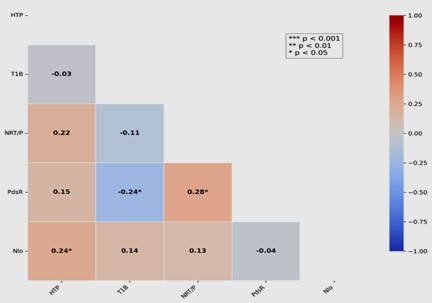
Figure 2. Correlation matrix of the variables under study.
Legend : Number of leaf lobes (NLL=NLo) ; Length of leaf lobes (LLL=LLo) ; Lobe width (LW=ILo) ; Petiole length (PL=LP) ; Main stem height (MSH=LT) ; Number of branches (NB=NRa) ; Size to the first branch (SFB=T1B) ; Number of tuberous roots per plant( NTR/P=NRT/P) ; Weight of tuberous roots per plant (WTR/P=PdsR)
Classification of cassava varieties
Principal Component Analysis: Variability between accessions was assessed using the principal component analysis based on agromorphological characteristics. The first two axes had values greater than 1 (according to the KAISER criterion, which follows the principle of minimum inertia) and expressed 56.8% of the total variability between accessions. They account for 31.2% and 25.6% of the total variance respectively (Figure 3). Yield parameters (tuberised root weight WTR and number of tuberised roots per plant NTR/P) made a major contribution to the formation of axis 1, while axis 2 was formed mainly by the contribution of morphological parameters (stem size and leaf appearance).
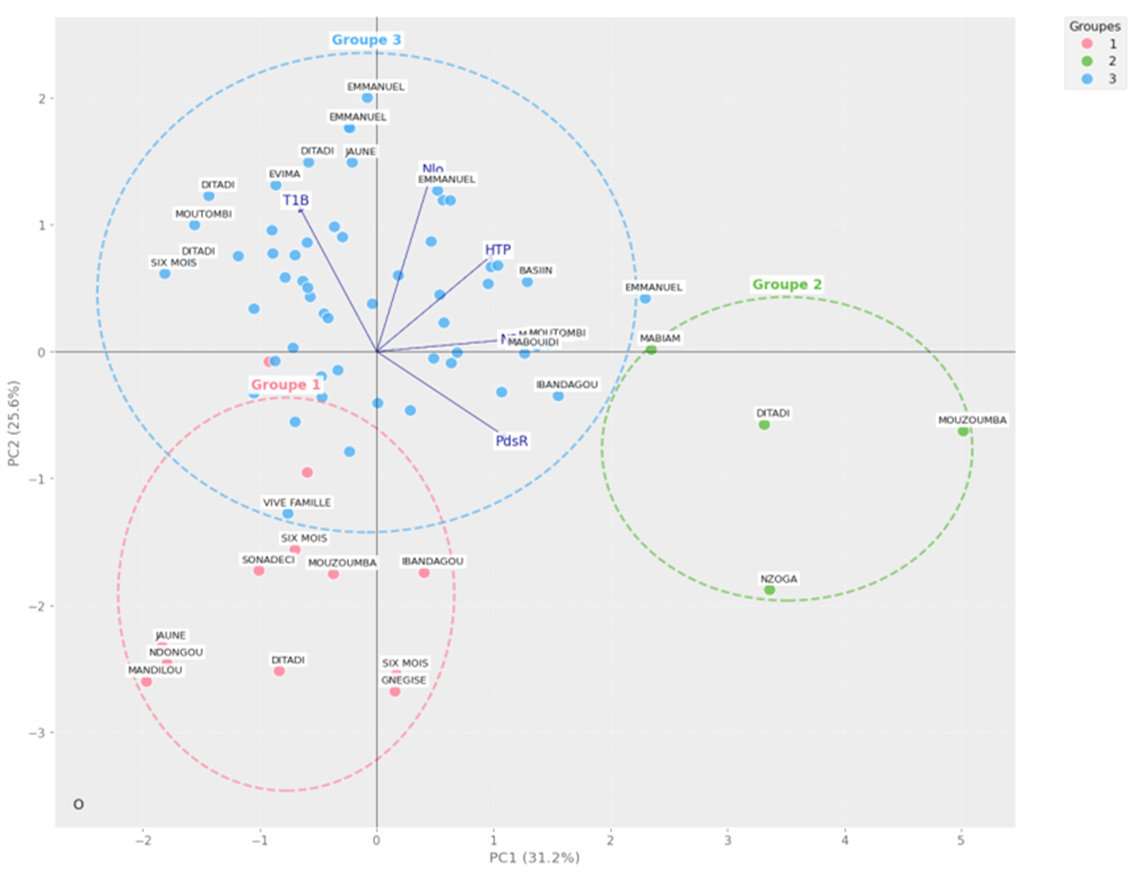
Figure 3. Distribution of variables by PCA and projection of individuals onto the plane formed by axes 1 and 2
Legend : Number of leaf lobes (NLL=NLo) ; Length of leaf lobes (LLL=LLo) ; Lobe width (LW=ILo) ; Petiole length (PL=LP) ; Main stem height (MSH=LT) ; Number of branches (NB=NRa) ; Size to the first branch (SFB=T1B) ; Number of tuberous roots per plant( NTR/P=NRT/P) ; Weight of tuberous roots per plant (WTR/P=PdsR)
Hierarchical ascending classification and discriminant factor analysis: Hierarchical ascending classification using variable means based on Euclidean distance, based on Ward’s method as the aggregation criterion, revealed three agromorphological groups from the 75 accessions evaluated. Figure 4 presents the dendrogram resulting from the HAC of these accessions.
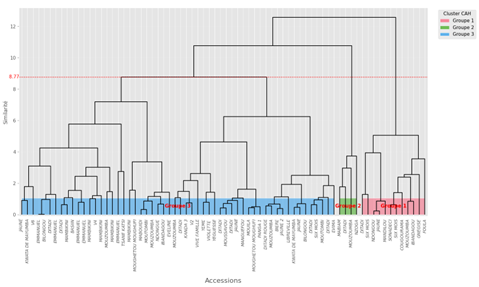
Figure 4. Dendrogram derived from HAC studies of the collection of 75 accessions.
Discriminant Factor Analysis was used to assess the relevance of the groups formed using the HAC. Table 4 shows the characteristics of the HAC groups. The three clusters are strongly characterised by the following variables: the height of the main stem (MSH), the size of the first branch (SFB), the number of tuberised roots per plant (NTR/P), the weight of tuberised roots (WTR) and the number of leaf lobes (NLL).
Table 4. Characteristics of dendrogram groups.
| Group | Number | MSH | SFB | NTR/P | WTR | NLL |
| 1 | 12 | 275 | 69.92 | 2.67 | 1570.83 | 5 |
| 2 | 4 | 404.25 | 0 | 5.75 | 5550 | 7 |
| 3 | 56 | 313.05 | 104.7 | 3.12 | 1116.38 | 7 |
DISCUSSION
The agromorphological evaluation of cassava accessions grown in the south-west region of Gabon showed a high degree of heterogeneity from the values of the parameters used in this study. This heterogeneity was reflected by coefficients of variations higher than 20%. The ranges of values from the morphological parameters obtained in this study are similar to those recorded by Thiémélé et al.. (2024) for cassava varieties grown on farms in Côte d’Ivoire (NLL: 5-9, LLL: 9-18cm, PL: 12-25cm, MSH: 100-300cm). The yield components expressed the production potential of these accessions and, in terms of tuberised root weight per plant, the results were slightly below those (WTR ≈ 2500kg) obtained by Fotso et al.. (2024) on ten samples of improved varieties introduced and grown in Mouila in southern Gabon. This difference can be explained by the effects of the drought period that coincided with the maturation phase of the trial in this study. Analysis of variance using the Kruskal-Wallis test revealed a p-value above the significance threshold (0.05) for all the variables studied. This observation indicates that there is no evidence of stochastic dominance between accessions. The differences between the medians are therefore not statistically significant. The correlations that exist between the quantitative variables studied would, in some cases, be of particular importance in varietal selection and improvement. This study revealed a positive correlation between the number and weight of tuberous roots. These same observations were also revealed on cassava in Ghana (Kumba, 2012) and Burkina Faso (Gmakouba et al.., 2018). The positive correlation (r=0.22) observed between the number of tuberised roots per plant and the height of the main stem in this study is in line with the results of Thiémélé et al.. (2024), Ntawuruhunga and Dixon (2010) and Kouakou et al.. (2023). The multivariate analyses used in this study were used to elucidate the nature and degree of divergence of cassava accessions collected in south-west Gabon. PCA, applied to the 75 accessions on the basis of the 9 morphological parameters, showed a variability (56.8%) within the said accessions which is represented by the first two axes identified on the KAISER criterion. Five of the 9 descriptors mainly contributed to the overall variability. These results are similar to those observed by Ephrem et al.. (2014) in the Central African Republic. They recorded a variability of 55% for six first axes cumulated with a partial contribution of 15 descriptors out of 27. Furthermore, the degree of variability in this study was lower than that revealed by Djaha et al.. (2017), in Côte d’Ivoire, who obtained a significant variability (63.84%) within the accessions analysed and revealed by the first two axes, with 8 contributing descriptors out of the 24 used. Three reasons can account for the variability observed in our study. One, the use of several cultivars including local and introduced accessions in the same field. Two, the continuous exchange of plant material with interesting agronomic traits between growers in different localities (Missihoun et al.., 2012). Mouketou et al.. (2022) noticed that farmers in rural areas in Gabon often bring cuttings though to be of higher economic potential when traveling to neighbouring town. Three, the level of heterozygosity within cassava accessions could have contributed to the diversity observed. These results are in line with research by Soro et al. (2024), who found that many cassava varieties grown in Africa are heterozygous. The hierarchical ascending classification revealed three morphological groups (G1, G2 and G3). DFA was used to assess the relevance of the morphological dissimilarities obtained from HAC. The high representativeness of the first two axes of the SFM indicates a strong phenotypic organisation directed by the variables: the height of the main stem, the size of the first branch, the number of tuberised roots per plant, the weight of tuberised roots and the number of leaf lobes. These observations corroborate the observations of Djaha et al.. (2017) who also showed a phenotypic organisation essentially based on the variables height of the main stem, height of the first branching and number of leaf lobes. Three clusters or groups were generated using HAC. The cluster 3 consisted of 56 accessions, which accounts for more than half of the sample size. The accessions that composed this cluster 3 had values close to the average for the height of the main stem, the number of tuberous roots per plant and the weight of tuberous roots per plant. Four accessions that constituted the cluster 2 shared the same distinctive characteristics for the descriptors HSM, NTR/P, and WTR whose values were higher than the averages for the collection studied. These results indicate that certain genotypes may be potential candidates for cassava production in low-rainfall areas or for varietal improvement programmes. Similar results were obtained by N’Zué et al.. (2014) by characterising 159 cassava accessions from south-west Côte d’Ivoire into 3 groups. The results of this study show that morphological markers continue to be used successfully in many agronomic characterisation and evaluation studies, allowing easier and faster differentiation of phenotypes.
CONCLUSION AND APPLICATION OF RESULTS
Varietal selection is based on the genetic variability of species. Morphological markers are the basis for identifying and classifying plant species. Agromorphological characterisation of 75 cassava accessions grown in Gabon’s south-west agricultural hubs showed a greater variability between them and highlighted a structuring into 3 groups strongly characterised by the height of the main stem, the number of tuberous roots per plant and the weight of tuberous roots per plant. The group 2 stood out for their potential for these parameters, which were more interesting than the others in the collection. They are of interest to farmers and to variety creation and improvement programmes in Gabon. They will make it possible to increase local production and improve farmers’ living conditions. The use of molecular tools would enable to study the potential of these accessions at the DNA level, in order to identify genes of interest for the desired varietal improvement.
ACKNOWLEDGMENTS
This work was supported by the central and west african virus epidemiology (WAVE) for Food Security program and the Institut de Recherche Agronomique et Forestière (IRAF) of Gabon.
Conflict of Interest: The authors declare that they have no conflict of interest.
REFERENCES
Adebayo K. & Seck A, 2022. West Africa Competitiveness Programme Regional Investment Profile–Summary Cassava Value Chain.
Bokanga M, 2001. Cassava: Post-harvest operations. International Institute of Tropical Agriculture (IITA), Ibadan, Nigeria, 220p.
Chuzel G, Vilpoux OF, Cereda MP, 1995. Le manioc au Brésil. Importance socio-économique et diversité. In : Transformation alimentaire du manioc. Cassava food processing. Agbor Egbe T. (ed.), Brauman Alain (ed.), Griffon Dany (ed.), Trèche Serge (ed.). CIRAD, FAO, CTA, IFS. Paris : ORSTOM, 63-74. (Colloques et Séminaires) ISBN 2-7099-1279-1.
Djaha KE, Abo K, Bonny BS, Kone T, Amouakon WJL, Kone D. and Kone M, 2017. Caractérisation agromorphologique de 44 accessions de manioc (Manihot esculenta Cantz) cultivés en Côte d’Ivoire. International Journal of Biological and Chemical Sciences. 11(1): 174-184.
Ephrem KK, Semihinva A, Woegan YA, Abalo A, Duval MF. and Dourma M, 2014. Diversité agromorphologique de Manihot esculenta Crantz (Euphorbiaceae) cultivée dans trois zones agroclimatiques en République Centrafricaine. European Scientific Journal, 10(3): 1857-1881.
Fotso KA, Bourobou D, Zinga KCR, Zozo R, Kombila A, Demikoyo KD, Effa EB, Guibingua MS, Abass A, Nabahungu L, Voga MJD. & Fiaboe KKM, 2024. Manioc au Gabon: vers un système semencier durable. 58p
Fukuda WMG, Guevara CL, Kawuki R, Ferguson ME, 2010. Selected morphological and agronomic descriptors for the characterization of cassava. Ibadan: International Institute of Tropical Agriculture (IITA), Ibadan, Nigeria, 19p.
Gmakouba T, Koussao S, Traore ER, Kpemoua KE. and Zongo JD, 2018. Analyse de la diversité agromorphologique d’une collection de manioc (Manihot esculenta Crantz) du Burkina Faso. International Journal of Biological and Chemical Sciences, 12(1) : 402–421.
Koko CA, Benjamin KK, Blanchard YA, Georges NA. & Assidjo EN, 2014. Comparative study on physicochemical characteristics of cassava roots from three local cultivars in côte d’ivoire. European Scientific Journal, 10 (33): 418-32.
Kouakou DA, Koffi KK, Angui CMV, Komenan AO, Arsène I. and Zoro Bi A, 2023. Agro morphological variability of cassava varieties cultivated in five regions of Côte d’Ivoire based on quantitative traits. Journal of Applied Biosciences, 181, 18962– 18973.
Kumba V, 2012. Genetic characterization of exotic and landraces of cassava in Ghana. M.Sc. thesis, University of Science and Technology, Dept. Plant Breeding, Kumasi, p.111.
Missihoun AA, Agbangla C, Adoukonou SH, Ahanhanzo C, Vodouhè R, 2012. Gestion traditionnelle et statut des ressources génétiques dusorgho (Sorghum bicolor L. Moench) au Nord-Ouest du Bénin. Int. J. Biol. Chem. Sci., 6(3):1003- 1018. http://dx.doi.org/10.4314/ijbcs.v6i3.8.
Mouketou A, Bourobou ND, Koumba AA, Abessolo MC, Gnacadja C, Zinga-Koumba RC, Ndong E, Owono M, Sima LR. & Mavoungou JF, 2023. Occurrence, Distribution and Farmers’ Perceptions of Cassava Diseases in Gabon, Central Africa. 16 (4), 49–63. https://doi.org/10.1007/s10340-021-01355-6
Mouketou A, Koumba AA, Gnacadja C, Zinga-Koumba CR, Abessolo MC, Ovono APM, Sevidzem SL, Mintsa R, Lepengué AN, & Mavoungou JF, 2022. Cassava mosaic disease incidence and severity and whitefly vector distribution in Gabon. African Crop Science Journal , 30 (2), 167–183. https://doi.org/10.4314/acsj.v30i2.5
Nokoe S, 2001. Augmented block Design (ABD): The choice for large scale farmer participatory on-farm trials, Available on http://www.unu.edu/enu/plec.
Ntawuruhunga P. and Dixon A, 2010. Quantitative variation and interrelation ship between factors influencing cassava yield. Journal of Applied Biosciences, 26 : 1594-1602.
N’zué B, Zohouri PG. and Sangare A, 2004. Performances agronomiques de quelques variétés de manioc (manihot esculenta crantz) dans trois zones agroclimatiques de la cote d’ivoire. Agronomie Africaine 16 (2): 1 – 7.
Ognalaga M, M’Akoué DM, Medza Mve SD. and Ondo P, 2017. Effet de la bouse de vaches, du NPK 15 15 15 et de l‟urée à 46% sur la croissance et la production du manioc (Manihot esculenta Crantz var 0018) au Sud-Est du Gabon (Franceville). Journal of Animal & Plant Sciences, 31(3) : 5063–5073.
Soro M, Zida SMFWP, Some K, Tiendrebeogo F, Otron DH, Pita JS, Neya JB. and Kone D, 2024. Estimation of Genetic Diversity and Number of Unique Genotypes of Cassava Germplasm from Burkina Faso Using Microsatellite Markers. Gènes, 15, 73.
Thiémélé DEF, Koné D, Noumouha ENG, 2024. Quelle variété de manioc (Manihot esculenta Crantz) est la plus adaptée aux zones sèches de production agricole ? Une étude agromorphologique des variétés de manioc dans la Région du PORO, au nord de la Côte d’Ivoire. Science de la vie, de la terre et agronomie. Rev. Ramres – Vol.12 Num.01. 2024/ISSN 2424-7235