

Journal of Applied Biosciences 209: 22138 – 22147
ISSN 1997-5902
Traditional uses of woody plants by a major ethnic group of Southern Cameroon
1Doumbe Makembe Léa Clémence, 1 Mvogo Ottou Patrice Brice, 2 Essome Koum Guillaume Leopold, 3 Ngouondjou Foze Teclaire, , 1* Ngotta Biyon Jacques Bruno, 1 Ndongo Din
1University of Douala Department of Plant Biology and Physiology Faculty of Sciences P.O. Box: 24157
Douala Cameroon
2University of Douala Department of Aquatic Ecosystems Management Institute of Fisheries and Aquatic
Sciences at Yabassi, P.O. Box: 7236 Douala Cameroon
3Department of Medical and Health Studies, University Institute of the Gulf of Guinea (IUG), Douala,
Cameroon
*Corresponding author email: ngottabruno@gmail.com
Submitted 9/04/2025, Published online on 30/06/2025 in the https://www.m.elewa.org/journals/journal-of-applied-biosciences https://doi.org/10.35759/JABs.209.3
ABSTRACT
Objective: Millions of people depend directly on forest resources to meet their nutritional, medicinal and energy needs. The aim of this study was to highlight usefully species in the habits of the Bulus ethnic group in the coastal region of Cameroon.
Methodology and results: The work was carried out in four villages, Ethnobotanical surveys based on stratified probability sampling of 100 individuals was use as the sampling method. The survey of local residents identified 64 species divided into 60 genera and 32 families. Irvingia gabonensis (Ando’o) (115 citations) was the most cited species for Food use, while Alstonia boonei (Ekouk) (102 citations), Pterocarpus soyauxii (Mbe) (20 citations), and Guibourtia tessmanii (Oveng) (19 citations) were respectively the most cited species for the Medical, Service, and Magico-spiritual uses. The highest Ethnobotanical Usage Values were obtained for Alstonia boonei (2.66), Irvingia gabonensis (2.57), and Guibourtia tessmanii (2.54).
Conclusions and application of findings: Ethnobotanical use value is an index that helps identify species of great interest. It was used to select useful species, particularly those with significant value. In this study, eight major species, including one endangered according to the IUCN status, were identified in the area. It is therefore appropriate to focus on the sustainable management of these NTFPs in order to meet not only the needs of the populations but also the conservation of biodiversity. These results can contribute to the
promotion of indigenous knowledge; to the promotion of local products such as traditional medicines, food, service wood… and to the conservation of biodiversity.
Key words: Atlantic Forest, conservation, ethnobotanical survey, indigenous people, NTFP, use value
INTRODUCTION
Forests have a socio-economic interest for local populations in the world, particularly in Africa (Badjare et al., 2018). The Congo Basin is the second largest forest massif of the world behind the Amazon, with an estimated area of 200 million of hectares (Doetinchem and Megevand, 2013). In Cameroon, forests cover a large part of the territory: in fact, the forested area covers around 22.5 million hectares, representing 48% of the national territory (Fongnzossie et al., 2014). The main threats to tropical forest ecosystems are land conversion, environmental degradation, the establishment of harmful exotic species and overexploitation (FAO, 2018). In the period from 2010 to 2020, an average of 3.9 million hectares of African forest were deforested each year (FAO, 2020). Anthropization of forests is also one of the main causes of biodiversity loss (Cisse et al., 2020). In Cameroon, agriculture accounts for 19.7% of gross domestic product (GDP) and employs over 50% of the nation’s working population, highlighting the drivers of biodiversity loss that are linked to the system of its economy, itself dependent on natural resources (SND30, 2020). According to FAO (2010), the importance of biodiversity conservation and the rational use of natural resources is increasingly precepted by international opinion as a pressing obligation. However, forest resource management policies can only be sustainable if they integrate the social, cultural and economic values that local communities associate with them (Dossou et al., 2012). This is the case for NTFPs, which are used by around 80% of the African population (Betti et al., 2016). The aim of this study was to highlight the preferred species used by one of the major ethnic groups of the southern region of Cameroon.
MATERIAL AND METHODS
Study site: This study area located in the Akom 2 and Niete divisions. This area is part of the Atlantic coast of the Congo Basin. The climate is characteristic of a very classic Equato-Guinean regime with four seasons, two of which are dry and two rainy (Kabelong et al., 2018). The average temperature is 24.3°C, and annual rainfall is 2188 mm. The relief is relatively rugged, with altitudes ranging up to 72 m and 630 m, soils belong to the group of ferralitic soils (MINATD, 2015). Vegetation belongs to the Guineo-Congolese Evergreen Dense Humid Forest Domain, more precisely to the Atlantic Forest Sector, in the Biafran District (Letouzey, 1985). Local population is grouped into two large groups, Bulu and Bagyéli (MINATD, 2015). The surveys carried out in four villages belonging to the bulu ethnic group: Assok, Akom 2, Biboulemam, and Bifa. They were chosen for their proximity to the Campo-Ma’an National Park, or to some community forests (figure 1).
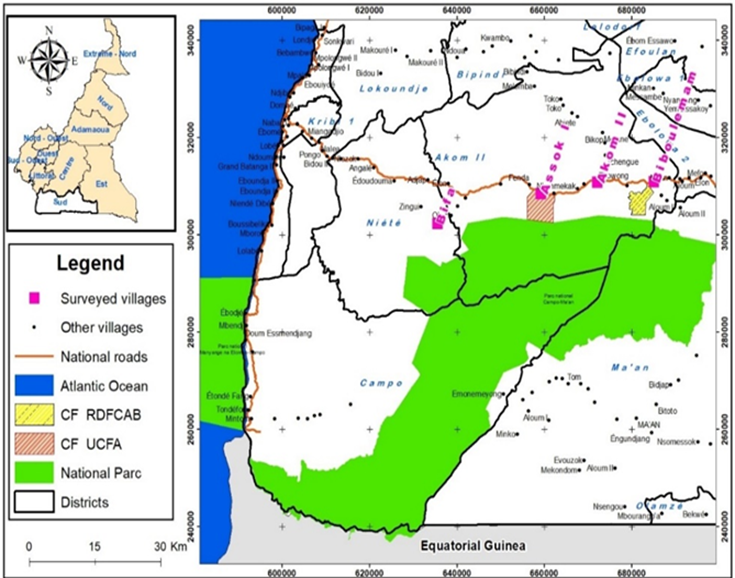
Figure 1: Location of the surveyed villages
Profile of respondents: This study was conducted following the ethnobotanical survey model. The sampling method used in this study was stratified probabilistic, where a total of 100 respondents belonging to the both genders, and with a minimum age of 20 years were selected.
Data collection: The interviews were conducted using the semi-structured interview model. The main data collected during the surveys relate to: (i) woody plant species collected by category of use (food, medicinal, magico-spiritual, service…); (ii) part of the plant species used; (iii) name in local language ‘Bulu’ of the plants used; (iv) importance of using each plant species. Interviews were conducted in French and/or local language (Bulu), with a local guide in charge of facilitating exchanges with respondents.
Collection and identification of samples: The plant samples collected were first identified by transposing local names into trade names for certain species, or directly to their scientific names. Identification of the species was based on the comparison of samples with data available in reference manuals (Letouzey,1985), as well as other data available at the National Herbarium of Cameroon. The species identified were characterized by their phytogeographical distribution types, according to Letouzey (1985), and with their conservation status found online, from the IUCN Red List.
Data processing: In order to identify the plants most in demand by local residents, the following indices were calculated.
Frequency of use (F):The frequency of use (F) of each NTFP corresponds to the ratio of the total number of people using the NTFP concerned (ni) to the total number of people surveyed (N), (Zahn et al., 2016).
Ethnobotanical Use Value: The Ethnobotanical Use Value (VU) of the species was calculated according to Camou-Guerrero et al. (2008). Data were recorded on a spreadsheet and analyzed using GraphPad Prism 8.0.1 and Xlstat 2022.1.2.1236 software.
RESULTS
Systematic of the species: The survey of local residents identified 64 species divided into 60 genera and 32 families. The most represented families were Caesalpiniaceae (8 species), followed by Apocynaceae (6 species), Anacardiaceae (5 species), (figure 2).
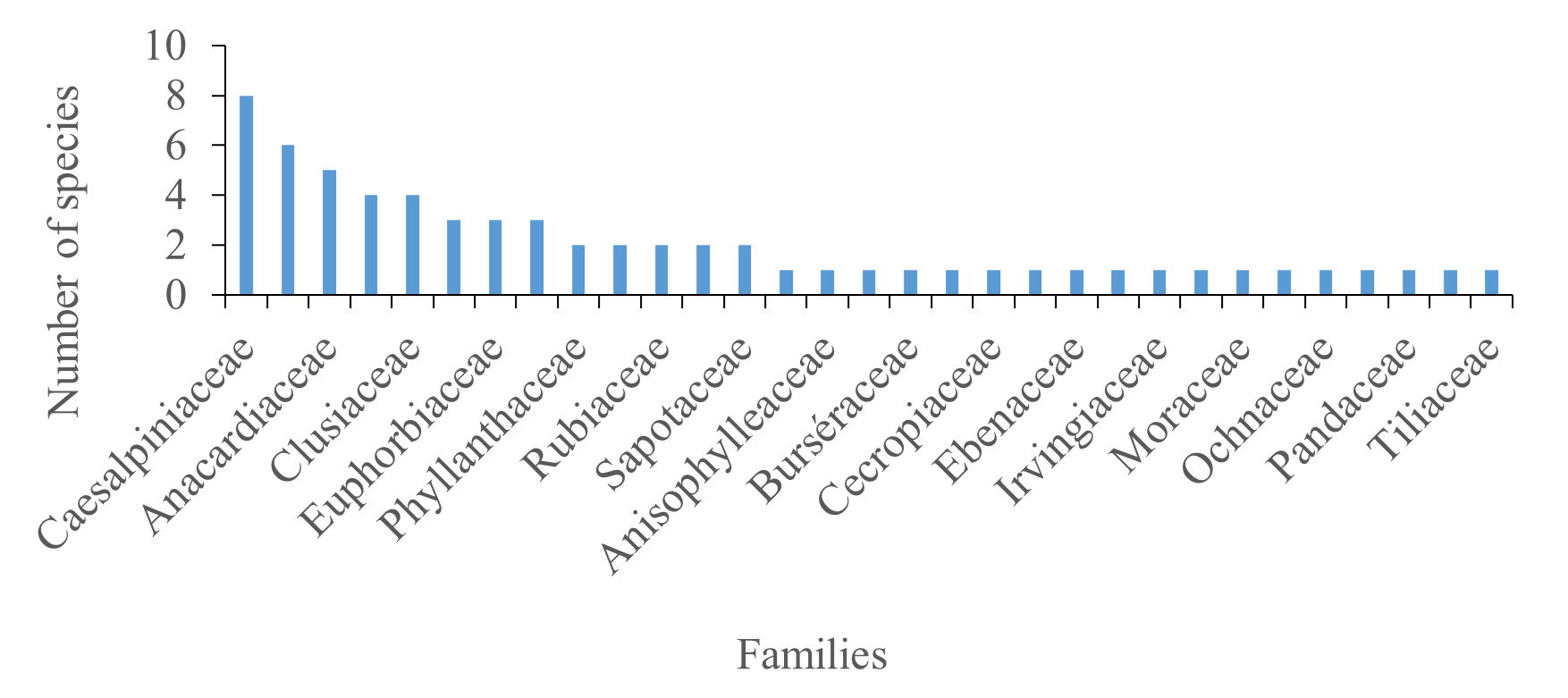
Figure 2 : Number of species of each family
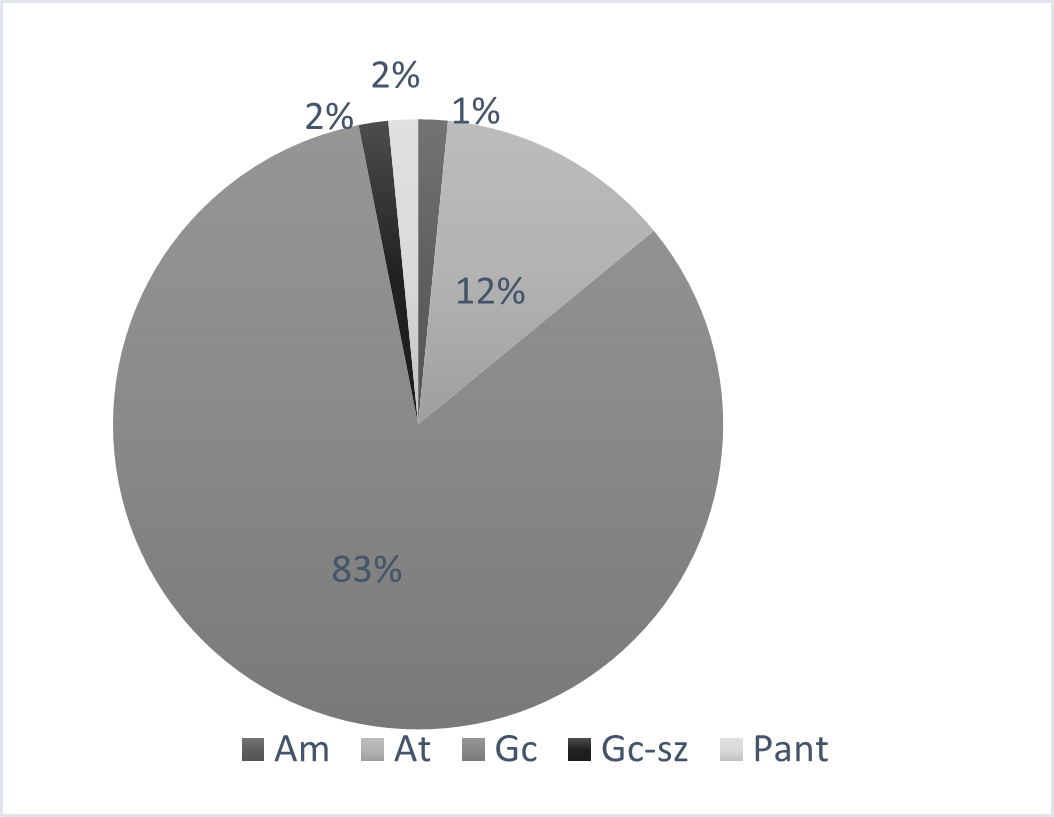
Phytogeographical analysis of the cited species revealed five (05) phytogeographical types. Most cited species belonging to the Guinean-Congolese type (53 species), followed by Afrotropical type with eight species (figure 3). Conservation status of the cited species belongs to five (05) categories. seven species are Threatened with extinction status recorded seven species, among which one species is Endangered (Guibourtia tessmanii (Harms) J. Leonard), and six species are vulnerables (VU) (Baillonella toxisperma Pierre, Diospyros crassiflora Hiern, Funtumia africana (Benth.) Stapf, Lophira alata Banques ex. Gaertn., Ricinodendron heudelotii (Baill.) Pierre ex Heckel, Sterculia oblonga Mast. Near Threatened status recorded (NT) five species (Daniellia ogea (Harms) Rolfe ex Holl, Mitragyna stipulosa (DC.) kuntze, Irvingia gabonensis (Aubry-Lecompte ex O’ Rorke) Baill., Milicia excelsa (Welw.) Berg, Nauclea diderrichii (De Wild.) Merr.). Not Assessed status (NE) recorded three species, Antrocaryon klaineanum Pierre, Pterocarpus soyauxii, and Terminalia superba (Engl. & Diels. At last, Least Concerned status record 49 species (figure 4).
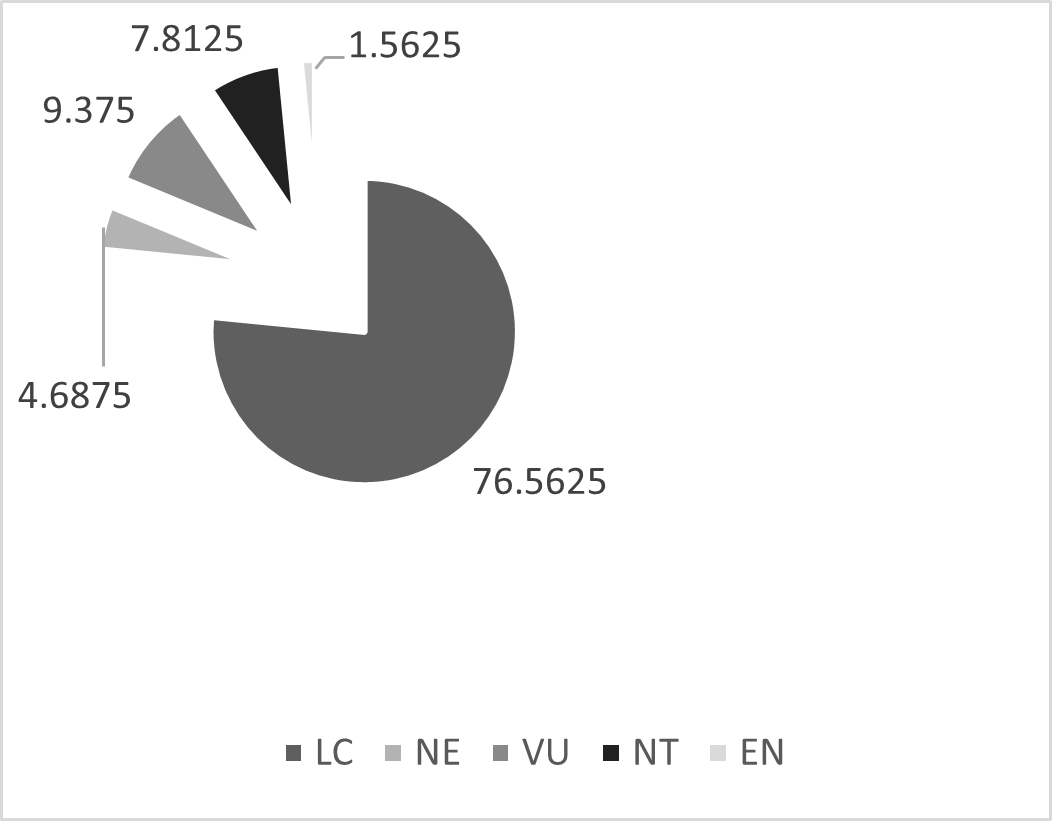
| Figure 4: Proportions (%) of IUCN status of inventoried species. EN= Endangered; LC= Least Concern; VU= Vulnerable; NE= Not evaluated; NT= Near Threatened |
| Figure 3: Proportions (%) of phytogeographical types of the cited species. Am= Afro-Malagasy, At= Afrotropical, Gc= Guinean-Congolese, Gc-Sz= Guinean-Congolese and Sudanese-Zambezian, Pan= Pantropical |
Traditional uses of the species: A total of four categories of uses and 1255 citations were recorded after the surveys: Food was the most cited category of use with 521 citations (41,51 %), followed by Medicinal category with 471 citations (37,53 %), Service category recorded 231 citations (18,41 %), and Magico-spiritual category recorded the lower number of citations (32 citations), (figure 5).
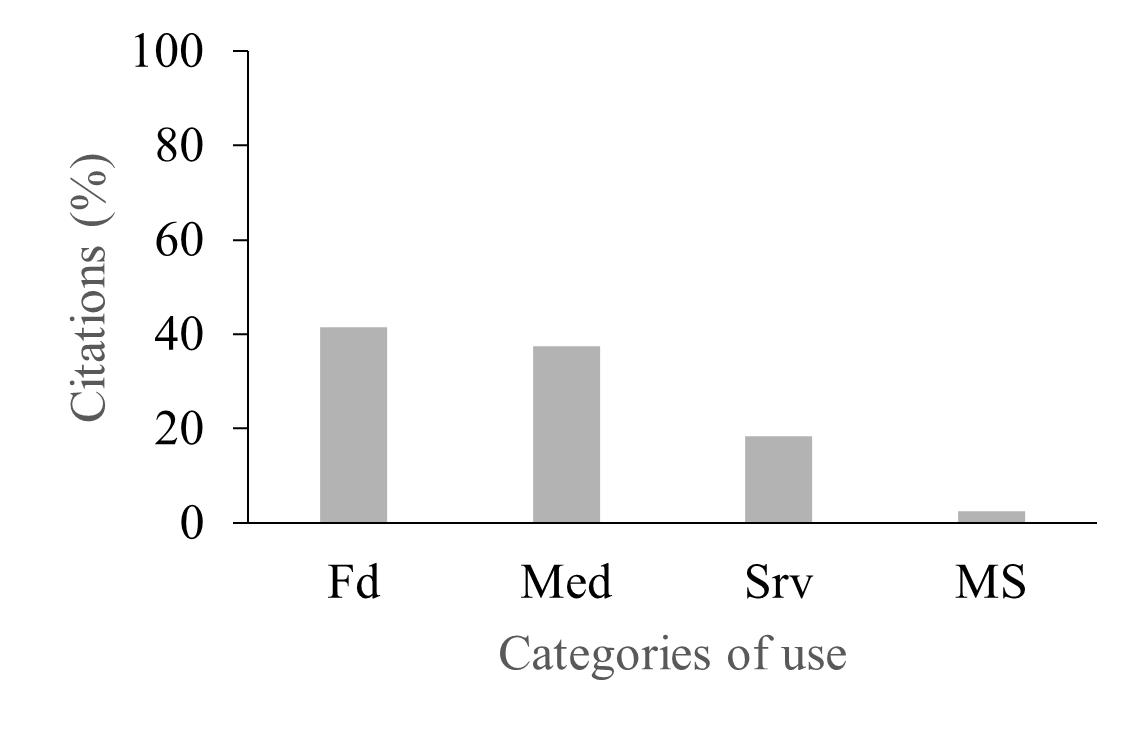
Figure 5: Proportions of citations of the categories. Fd= Food; Med=Medicinal; Srv=Service; MS= Magico-Spiritual
Species by category of use
Food plants: A total of 31 species were cited as food plants. The citations are distributed among five uses among which edible fruits were most represented (24 species, 333 citations). Then come the spices (05 species, 96 citations), the main dish (05 species, 58 citations), the drinks (04 species, 25 citations); then the oils with 02 species, 10 citations). The parts of plant of this category included mostly the fruits (311 citations), seeds (97 citations), almonds (59 citations), and barks. The main food species cited was Irvingia gabonensis (Aubry-Lecompte ex O’Rorke) Baill. (115 citations), followed by Scorodophloeus zenkeri Harms, Coula edulis baill, (41 citations each), and Trichoscypha acuminata Engl., (36 citations).
Medicinal plants: A total of 27 species belonging to 26 genera grouped into 17 families were listed in the Medicinal category of use. The most cited uses were health problems such as malaria (260 citations), stomach ache (53 citations), and backache (21 citations). In addition, the diseases treated by plants mentioned by riparian populations fall into eight (08) main disease groups, of which the group that requested the greatest number of species was the Digestive System Diseases group, with 14 species. It was followed by Infectious and Parasitic Diseases (13 species), and Genital-Urinary Diseases (07) species). The most cited species were Alstonia boonei De Wild (102 citations), Picralima nitida (Stapf) T. Durand & H. Durand (68 citations), Annickia chloranta (Oliv.) Setten & Maas (51 citations), and Garcinia lucida Vesque (Table II). Several parts of the plant, including bark, leaves, leaves, fruits, seeds, latex and roots, are used for therapeutic purposes. Of these parts, bark is the most cited (359 citations), followed by seeds (49 citations) and fruits with 31 citations, (Table 1).
Table 1: Plant species identified among respondents
| Species | Families | Local Names | Categories of Use | Parts Used | Frequency of use (%) | ||
| Alstonia boonei | Apocynaceae | Ekouk | Med, Srv | Bk, Le, La, Tr | 85 | ||
| Irvingia gabonensis | Irvingiaceae | Ando’o | Fd, Med, MS, Srv | Al, Bk, Fr, Tr | 74 | ||
| Picralima nitida | Apocynaceae | Ebam | Med | Bk, Le, Se | 49 | ||
| Annickia chloranta | Annonaceae | Mfo | Med | Bk | 47 | ||
| Coula edulis | Olacaceae | Ewomé | Fd, Med, Srv | Bk, Le, Fr, Se, Tr | 45 | ||
| Garcinia lucida Vesque | Clusiaceae | Essok | Fd, Med | Bk, Fr, Rt | 37 | ||
| Trichoscypha acuminata | Anacardiaceae | Abut | Fd | Fr | 36 | ||
| Zanthoxylum gilleti (De Wild.) PGWattermani | Rutaceae | Bongo | Srv | Tr | 31 | ||
| Ricinodendron heudelotii (Baill.) Pierre ex Heckel | Euphorbiaceae | Essessang | Fd, Med | Bk, Se | 31 | ||
| Baillonella toxisperma Pierre | Sapotaceae | Adjap | Fd, Med, MS, Srv | Al, Bk, Fr, Tr | 29 | ||
| Cola lepidota K. Schum. | Sterculiaceae | Emvoe | Fd, Srv | Bk, Le, Fr, Tr | 28 | ||
| Rauvolfia vomitoria Afzel. | Apocynaceae | Obaton | Med | Bk, Le, Fr, Rt | 27 | ||
| Trichoscypha arborea (A. Chev.) A. Chev. | Anacardiaceae | Engong | Fd | Fr | 27 | ||
| Guibourtia tessmanii (Harms) J. Léornard | Caesalpinaceae | Oveng | Fd, Med, MS, Srv | Rt, Sa, Tr | 26 | ||
| Maesopsis emini Engl. | Rhamnaceae | Nkala | Fd, Srv | Br, Fl, Fr, Tr | 25 | ||
| Garcinia kola Heckel | Clusiaceae | O nyê | Fd, Med | Bk, Fr, Se, Rt | 22 | ||
| Poga oleosa Pierre | Anisophylleaceae | Angalé | Fd, Srv | Fr, Se, Tr | 22 | ||
| Pterocarpus soyauxii Taub. | Fabaceae | Mbe | Med, MS, Srv | Se, Tr | 21 | ||
| Terminalia superba Engl. & Diels | Combretaceae | Akom | Med, Srv | Br, Bk, Tr | 20 |
Legend: Al= Almond; Bk= Barks; Br= Branche; Fl= Flower; Fd= Food; Fr=Fuit; La= Latex; Le =Leave; Med= Medicinal; MS= Magico-spiritual; Rt= Root; Sa= Sap; Se= Seed; Srv =Service; Tr=Trunk
Ethnobotanical use value of plant species: The ethnobotanical use values calculated for the listed species vary from 0.66 to 2.66. The highest VUs were obtained in three species namely Alstonia boonei (2.66), Irvingia gabonensis (2.57) and Guibourtia tessmanii (2.54), (Table 2). These were considered key species for the site studied.
Table 2:Ethnobotanical use values of a few species cited by respondents
| N° | Plant species | Food | Medicinal | Service | Magico-spiritual | Overall |
| 1 | Alstonia boonei | 2.65 | 0.02 | 2.66 | ||
| 2 | Irvingia gabonensis | 2.44 | 0.04 | 0.03 | 0.05 | 2.57 |
| 3 | Guibourtia tessmanii | 0.04 | 0.06 | 0.28 | 2.16 | 2.54 |
| 4 | Garcinia lucida | 0.47 | 1.26 | 1.73 | ||
| 5 | Picralima nitida | 1.72 | 1.72 | |||
| 6 | Baillonella toxisperma | 0.55 | 0.21 | 0.29 | 0.17 | 1.21 |
| 7 | Annickia chloranta | 1.16 | 1.16 | |||
| 8 | Coula edulis | 0.81 | 0.03 | 0.23 | 1.07 | |
| 9 | Cola lepidota | 0.58 | 0.37 | 0.96 | ||
| 10 | Scorodophloeus zenkeri | 0.96 | 0.96 | |||
| 11 | Rauvolfia vomitoria | 0.92 | 0.92 | |||
| 12 | Garcinia cola | 0.05 | 0.82 | 0.87 | ||
| 13 | Trichoscypha acuminata | 0.85 | 0.85 | |||
| 14 | Uapaca guineensis | 0.14 | 0.67 | 0.81 | ||
| 15 | Maesopsis emini | 0.35 | 0.43 | 0.78 | ||
| 16 | Pterocarpus soyauxii | 0.16 | 0.11 | 0.77 | ||
| 17 | Pentaclethra macrophylla | 0.02 | 0.11 | 0.03 | 0.5 | 0.66 |
DISCUSSION
Surveys carried out in villages in the Akom 2 and Niété subdivisions identified 64 NTFP source species. This total is close to the 52 species identified by Caspa et al. (2020) in other localities in the same region. However, they differ from those obtained by Nguimfack et al. (2022), who identified 96 woody and herbaceous species in the coastal region of Cameroon. The divergence with the results of this study can be interpreted from three angles: (i) soil and climate factors, whose differences from one region to another would have an influence on plant diversity; the biological type studied, as only woody species were taken into account in the present study; the ethnic group studied, which was predominantly Bassa in the previous study, as opposed to Bulu in this study. This hypothesis is confirmed by the results obtained from studies conducted by Kouakou et al. (2019), who explained the diversity and variability of NTFP uses by differences in the habits and customs of the populations studied. The analysis of the results of the survey on non-timber forest products used by local populations showed that 31 plant species were indicated for food use, thus being the main use of NTFPs by local populations. Similar results were found by Lescuyer (2010) in the South Cameroon Region where the main use of NTFPs was for food. These results corroborate the conclusion drawn by Lescuyer (2010) according to which the interest in food NTFPs is due to the fact that these plants contribute to food security and also to the reduction of poverty. Among the organs sought to satisfy dietary needs, fruits are the most used. On the other hand, Ngbolua et al. (2021), found that the leaves are the most used for food. The high use of fruits in the diet in this study is due to the fact that local residents use food NTFPs as fruit for eating. However, in the work of Ngbolua et al. (2021), NTFPs were used more for making meals. Eight (08) major species, including three (03) key species, such as Alstonia boonei, Irvingia gabonensis, Guibourtia tessmanii were highlighted in the Ethnobotanical Use Value calculations. Species such as Baillonella toxisperma, Coula edulis and Irvingia gabonensis had already been reported by Nnanga et al. (2017) as being among the most widely used species in the coastal zone of Cameroon. Similarly, Bayoi et al. (2021), had shown that Alstonia boonei, Baillonella toxisperma, Irvingia gabonensis were among the most used species in some localities of the East-Cameroon region. Their usefulness is corroborated by other authors, who have listed uses such as rites, soup-making and oil production (Nnanga et al., 2017; Caspa et al., 2020). This shows the importance of these species in the Cameroon forest zone, and perhaps in the Central African sub-region.
CONCLUSION AND APPLICATION OF RESULTS
As with other ethnic groups, non-timber forest products (NTFPs) are one of the main sources of food and medicine for the Bulus ethnic group in the coastal region of Cameroon. The results of the surveys enabled us to characterize the NTFP source species used by the populations. A wide variety of NTFP source species emerged, with the species cited in the service plant category being the most numerous. eight major species, in which one is an Endangered species according to IUCN status, were singled out from the eight major species identified in the study area, revealing a certain preference by local populations, exposing them to the risk of overexploitation, which would increase their vulnerability. Sustainable management strategies must therefore be established to guarantee their sustainability. These results can contribute to the promotion of indigenous knowledge; to the promotion of local products such as traditional medicines, food, service wood… and to the conservation of biodiversity.
ACKNOWLEDGEMENT
We thank the administrative, traditional authorities and the local population of the study area for the information provided during the conduct of this study.
REFERENCES
Badjare B, Woegan YA, Folega F, Atakpama W, Wala K, Akpagana K, 2021. Vulnerability of woody resources in relation to different forms of use in Togo: the case of the doungh-lions pit protected area landscape (savannah region). Reviewed Agrobiologia www.asjp.cerist.dz/en/downArticle/255/11/2/173028
Bayoi EA, Menyene EF, Mouyaka AME, Mbezele JYN, 2021. Management of timber and non-timber forest products in the East Cameroon region: Case of the Abong Mbang multipurpose agricultural research station. Journal of the Cameroon Academy of Sciences, 17 (1): 3-16. https://doi:10.4314/jcas.v17i1.1
Betti JL, Manga NC, Dibong SD, Eboulé SA, 2016. Ethnobotanical study of spontaneous food plants sold in the markets of Yaounde, Cameroon. International Journal of Biological and Chemical Sciences. 4(10): 1678 -1693. https://doi:10.4314/jbcs.v10i4.19
Camou-Guerrero A, Reyes-García V, Martínez-Ramos M, Casas A, 2008. Knowledge and use value of plant species in a Rarámuri community: a gender perspective for conservation. Human Ecology 36: 259-272. https://doi: 10.1007/s10745-007-9152-3
Caspa RG, Nyambi GN, Mbang JA, Mabe MN, Nwegueh AB, Foahom B, 2020. Socio-economic Benefits of Non-timber Forest Products to the AFCOE2M Communities of Southern Cameroon. Sustainable Agriculture Research 9 (3): 1927-0518. https:// doi:10.5539/sar.v9n3p30
Cisse A, Ouattara M, N’guessan EA., Abrou JEN, 2020. Plant diversity and plant uses in a Sudanian savanna area: the case of Ferkessédougou locality (North, Ivory Coast). International Journal of Biological and Chemical Sciences 14(8): 2807-2825. https: //doi: 10.4314/ijbcs.v14i8.13
Dossou ME, Houessou GL, Lougbégnon OT, Tenté AHB, Codjia JTC, 2012. Ethnobotanical study of woody forest resources of the Agonvè swamp forest and related terroirs in Benin. Tropicultura 30 (1): 41-48.FAO. 2020. Global Forest Resources Assessment 2020. Main findings. Rome. https://doi.org/10.4060/ca8753fr.
FAO, 2020. Évaluation des ressources forestières mondiales 2020. Principaux résultats. Rome. https://doi.org/10.4060/ca8753fr.
FAO, IFAD, WHO, WFP, UNICEF, 2018. Building climate change resilience for food security and nutrition. The State of Food Security and Nutrition in the World. Rome. FAO 30 p.
FAO, 2010. Global Forest Resources Assessment. Main report, FAO study, Rome, Italy. 348 p.
Kouakou KA, 2019. Availability and vulnerability of source species of non-timber forest products of plant origin in the classified forest of Haut-Sassandra and its periphery after the decade of crisis in West-Central Côte d’Ivoire. Jean Lorougnon Guede University, PhD thesis Doctor. 113p.
Lescuyer G, 2010. Economic importance of non-timber forest products in some villages in Southern Cameroon. Tropical Woods and Forests 304(2): 15-24. https://doi.org/10.19182/bft2010.304.a20442
MINATD, 2015. Akom II municipal development plan. 177 p.
Nnanga JF, Priso RJ, Dongmo AB, Ndongo Din, 2017. Ethnobotanical study of plant non timber forest products in the coastal area of Cameroon: Cases of Yabassi and Mouanko. Journal of Biodiversity and Environmental Sciences 10: 225-239.
Ngbolua KN, Molongo MM, Libwa MTB, Amogu JJD, Kutshi NN, Masengo CA, 2021. Ethnobotanical survey of wild food plants in the Mobayi-Mbongo Territory (North Ubangi) in the Democratic Republic of Congo. Moroccan Journal of Agricultural and Veterinary Sciences 9(2): 259-265.
Ngodo MJB, Angoni H, Annie CP, Kono L, 2017. Natural regeneration potential of some priority non-wood forest products in the Akom II production basin (South Cameroon). World Wide Journal of Multidisciplinary Research and Development 4 (25): 2454-6615. E-
Nguimfack DJ, Ngotta BJB, Mvogo OPB, Ebongo LE, Mokake SE, Bell DM, Doumbe ML, Priso RJ, 2022. Uses of Non-Timber Forest Products exploited by the populations of Dibombari and Pouma, two localities of the Littoral region (Cameroon). Journal of Applied Biosciences 176: 18322-18341. https://doi.org/10.35759/JABs.176.11
Zanh GG, Barima YYS, Kouakou KA, Sangne YC, 2016. Uses of non-timber forest products according to local communities in the Haut-Sassandra classified forest (Central-West Ivory Coast). Indian journal of pure & applied biosciences 4 (5): 212-225. http://dx.doi.org/10.18782/2320-7051.2346